
 Posted by
 Wales U20 bounced back brilliantly from a tough U20 Six Nations to clinch a well deserved sixth-place finish at the World Rugby U20 Championship in South Africa over the last month.
It was a tournament where the young Welshmen displayed skill, guts and a togetherness as a playing group to push New Zealand all the way, beat Japan comfortably and battle past an improving Georgia age grade set up that had nil’d Argentina, beaten Italy and fallen just short against South Africa.
In the end the last game against Australia was just one game too far for a squad that had been unable to rotate too much thanks to injury and the importance of playing key men in every game to even make the fifth-place play-off, but a sixth-place finish is one that I’m sure those in charge would have happily accepted pre-tournament.
Of course the man leading the coaching staff, Mark Jones, was doing so on a temporary basis having replaced Byron Hayward after the former Scarlets and Wales senior men’s defence coach resigned post-Six Nations. As a result Jones has garnered a lot of compliments on turning results around from the five straight losses across February and March.
However, and I must stress that this isn’t taking away from the achievements of Jones who is clearly a good coach having undergone a very impressive apprenticeship at RGC, Namibia, Crusaders and Worcester, but that trend of a tough Six Nations followed by a better World Rugby U20 Championship is one that may well continue over the next few years.
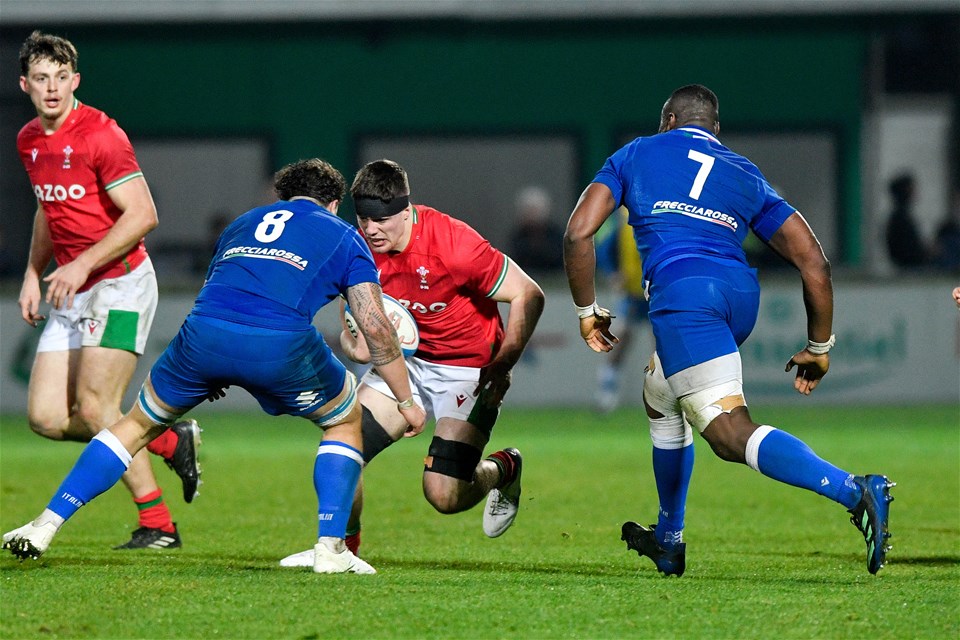
That’s because of two reasons; firstly, the Welsh Rugby Union has always used the Six Nations as an extended trial of sorts for the summer’s tournament, blooding new players to the level and trying out combinations with players often training around education commitments.
There is also the case that some players are required by their clubs, so the disjointed nature of the two months prevents too much familiarity being gained unlike the two months of full-time camp in the summer, whereas the likes of Ireland, England and France can use their strength in depth to remain competitive despite their challenges.
And it is that need for players at their clubs which is the second reason why the up-and-down nature of the Wales U20s season will continue, and probably remain quite extreme.
As the financial restrictions on Welsh professional club rugby bite it is likely that Academy members will be required to play more minutes at an earlier stage, or at least be used as matchday 23 cover, with the clubs carrying smaller playing squads. Combine that with the international players being away and injuries striking, and the U20s player pool could shrink dramatically for the Six Nations.
Looking at the players still eligible for U20 rugby next year from this season’s squad, and Evan Hill could be called on by the Ospreys with Adam Beard and Rhys Davies likely to be missing, Ryan Woodman may be involved with Dragons if some or all of Dan Lydiate, Aaron Wainwright and Taine Basham are unavailable, and Harri Wilde may be getting minutes for Cardiff who currently have very little fly-half cover.
So while Wales U20 enjoy the rightly given plaudits for their success over the last few weeks, supporters should prepare for more campaigns like that of 2023 as the scenery of Welsh Rugby changes dramatically over the coming five years.
 Cardiff Rugby Life
Five years? Arguably good/bad but we need our development players to stand up for season 23/24. Could go one of two ways. I remember Treviso…
LikeLike