 Posted by
 Nothing is likely to stop Ireland’s march to the Grand Slam this year, let’s get that out of the way to start with.
Andy Farrell’s men are the best team in the 2024 Guinness Six Nations by some distance. Financially dominant, but on top of that with brilliant systems through the Academies, into provincial sides and on to the national team. It’s also a national team that has been together a long time now and has such a clear identity to it.
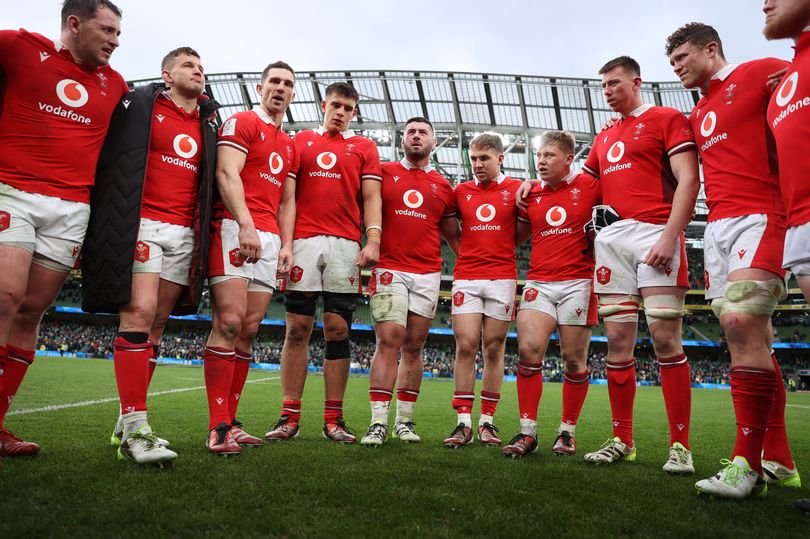
So Wales heading out to Dublin in the midst of a major transition at national team level and in the professional game generally, off the back of two defeats and against the best side in the Championship, is always going to be a huge challenge.
As it turned out, I actually thought it went a lot better than I was anticipating. A 31-7 scoreline is one-sided, but looking at the game without focusing on the points scored it was equal in fairly large parts, with the major difference being actually getting over the try line.
Looking at it statistically for a moment; Wales were similar to Ireland in terms of possession, territory, carrying, tackling, kicking and turnovers. The scrum struggled to start but stabilised quickly, while the lineout was solid enough. However, when you get into how effective the Welsh attack was, and the subsequent knock-on impact on the defence, it tells the story of the game.
The Irish carried for double the metres that Warren Gatland’s men did, made 12 linebreaks as opposed to our single effort, and beat double the number of defenders. On the opposite side the Welsh missed 36 tackles, with the hosts missing just 15. Ireland consistently punched holes, while Wales simply bounced off the green wall.
From Gatland’s perspective there’s two issues to my eyes; we don’t have the major ball carriers in the squad to give a platform to attack from off their own back, and the decent ball carriers we do have aren’t getting their hands on the ball in the right areas.
Aaron Wainwright carried the ball 14 times as the primary carrier, which is to be expected, but he’s backed up by Tommy Reffell and Elliot Dee as the second and third top carriers in the Welsh pack, rather than players like Gareth Thomas and Alex Mann who are likely to be more effective in those tight areas either down to power or footwork pre-contact.
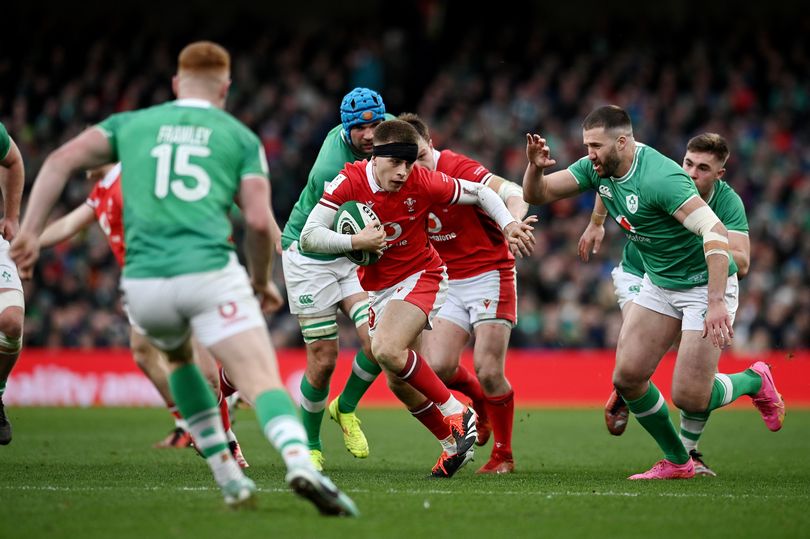
George North was the top carrier in the backs, also to be expected, but too often this is coming in the wider channels hunting for space off slow ball, rather than bringing him from out-to-in and using his bulk to make metres in the 12 channel, allowing the rest of the back line to take advantage of the platform created.
Looking at the effort being exerted for such little reward, leading to regular turnovers and inviting pressure defensively, it’s no surprise that eventually the legs fell off Wales. Mike Forshaw will be very pleased with the defensive performance on the whole, the line speed and organisation in the first half caused the ultra slick Irish attacking machine problems, but by the final 10 minutes the huffing and puffing of our ultimately unsuccessful attacking performance had sapped all energy from the men in red.
It’s tough to write off any system or individual player based on playing away in Dublin currently, but looking at Ireland as the benchmark, certainly in the Northern Hemisphere and probably globally, then that is the opponent we have to focus on getting competitive against.
That starts over these final two rounds as France and Italy visit Cardiff, both facing challenges of their own during this Six Nations. Les Bleus are struggling with their performance levels, as well as with injuries and suspensions, while the Azzurri are likely to be wooden spoon contenders again despite some more small improvements on the field.
There are chances there for this young Welsh squad to get results now. They’ll have been in camp for six weeks, had experience of going to Twickenham and the Aviva Stadium, as well as playing in front of a packed Principality Stadium. Their growth individually and as a team remains the priority, but Gatland can consider some selection tweaks to start getting some points on the board too.
For example, could Mackenzie Martin start at blindside flanker to bring his ball carrying into the pack? Is it time to see Will Rowlands and Dafydd Jenkins together at lock and understand the impact of losing Adam Beard on the set piece? Should Mason Grady be getting the nod on the right wing to bring his bulk into first phase strike plays as a new Alex Cuthbert?
As ever, international team selections are about balance, but now seems right to test out exactly where that balance lies for Wales, could it be away from the set piece and general industry around the field, and more towards overtly ball carrying and attacking expansively from that platform.
Gatland retains the free hit element on this Six Nations as part of a rebuild. That has worked with individual personnel, now is the time to properly stretch it to team tactics and understand exactly what type of team he is building and where they could go. Get it right, and there’s potential at his fingertips. Get it wrong, and it’s a decade of being noncompetitive.
 Cardiff Rugby Life