 Posted by
 It seems contradictory to say that Ioan Cunningham did a great job as Cymru Head Coach, had the ability to turn current performances around and is still a good coach, but it is also right that he now departs the job.
Coming in at the back end of 2021 he was instrumental in shaping the national team’s performance environment as professional contracts were introduced, overseeing notable improvement results-wise across 2022 and up to the third-place finish and subsequent WXV1 qualification at the 2023 Six Nations.
His work with the forwards in particular was clear and obvious for anyone watching, shaping them into arguably the best pack in international rugby outside the trailblazers of England, France and New Zealand. They were, and still are to a degree, a feared set of eight that are strong at the set piece, a constant breakdown pest and provide a platform to attack from.
Unfortunately the form took a sharp downturn from mid-2023 to the present, in-part as confidence was knocked going up against those top, top sides in WXV1, then as the women’s programmes in Ireland and Scotland improved, and as the cracks showed in the Welsh system with a lack of follow-up investment to continue driving improvement and the almost completely non-existent development pathway.
Yet there was still the feeling that while pressure on Cunningham built as losses piled up, he was still more than capable of getting Cymru to a point of being competitive in the Six Nations once again and into the knockout stages of next year’s Rugby World Cup.
The last few weeks have been cataclysmic for the women’s national team performance programme off the pitch though, and the Head Coach did not escape criticism from that. As Fiona Tomas broke in The Telegraph, the Welsh Rugby Union’s (WRU) handling of contract negotiations was a shambolic mix of incompetence, misogyny and blackmail.
Cunningham was complicit in his approaches to players during last season’s Six Nations campaign, despite them being clear that their negotiations were being handled by the Women’s Rugby Association (WRA). It’s not a particularly egregious error, but in the context of his management level colleagues’ behaviour it’s not a helpful addition.
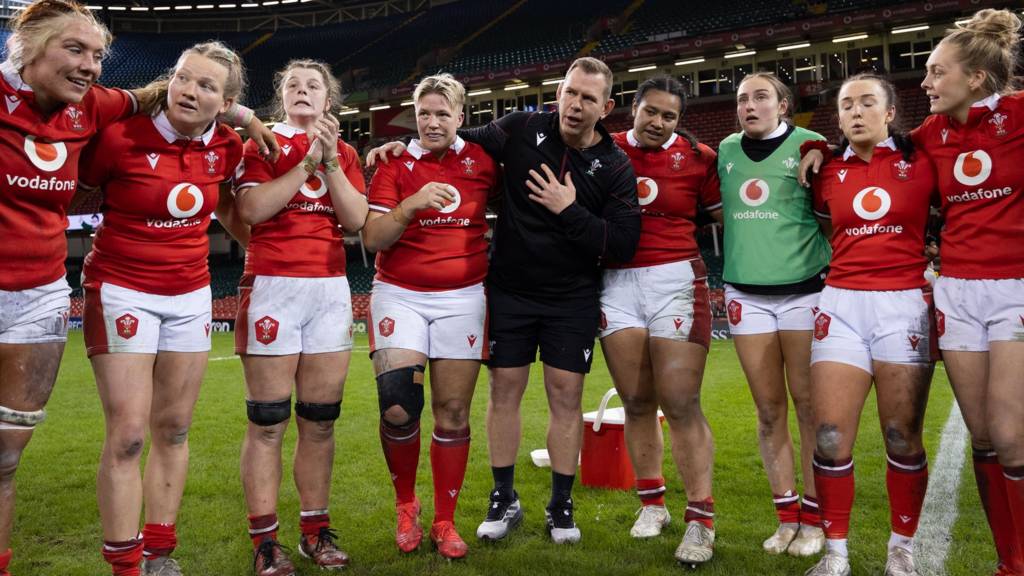
For the culture, and for a fresh start for the programme before a huge year, it’s right that he steps aside from his role as Head Coach. However, there is no world in which he should be the only departure resulting from this latest WRU debacle.
How Nigel Walker, as ‘Executive Director of Rugby’ and the main instigator of the blackmail element of the contract negotiations, remains in-post is a mystery. There would seem to be quite clear grounds for dismissal due to gross misconduct, but just on a personal integrity level it must be difficult to justify him staying in his role.
What appears to have happened over the last few years is that the WRU have made the women’s national team professional and then effectively put their feet up. Job done, box ticked, now where’s my next lot of corporate hospitality coming from?
There is no specific women’s rugby management structure, as mentioned above there is no proper development pathway, no moves to install any sort of professional club rugby scene, and within the minimal coaching setup that does exist it’s a half-arsed operation as underlined by the recent appointment of former Ospreys centre Ashley Beck to three separate coaching roles; women’s performance pathway coach, Brython Thunder Head Coach and Cymru D20 assistant coach.
For the post-Cunningham slate to be properly clean it needs rid of Walker, a Head of Women’s Performance Rugby appointed overseeing the national team and pathway reporting to the WRU Board, and a total review of the structure and funding of the player pathway, coaching structure and environment around the national team.
Get that appointment and the review of the national team set up done by the Six Nations and changes can be implemented in time to give the new Head Coach the opportunity to use that tournament as a free hit before flying into the Rugby World Cup. Then get the overview of the pathway and coaching structure done by 2026 and the aim can be to be properly competitive by the 2029 edition of the competition.
It’s a lot to ask of an organisation as poorly run as the WRU is, but unless drastic action is taken now then the progress made by the likes of Ireland, Scotland and Italy will leave Cymru too far behind to catch up.
 Cardiff Rugby Life